
Design and build AI tutor
Elon Musk: Make it work first, you can always improve it later “If you are going to create a company the first thing you should try to do is to create a working prototype, everything looks great on PowerPoint, you can make anything work on PowerPoint, but if you have an actual demonstration article, even if its in primitive form, that’s effective for convincing people”
- 01/19/2026 – (8) 傅盛 on X: “AI教父辛顿说:1v1老师也要干不过AI了。1v1授课之所以有效,是因为能盯着你查漏补缺,但AI它背后是数百万孩子的真实学习数据,你还没开口,它就知道你可能要在哪里卡壳。辛顿还预言,未来十年,每个人都能配一个懂你认知水平、且永不疲倦的顶级大脑当私教。教育的效率,真的要变天了。 https://t.co/facKwYSVoy” / X
- 01/19/2026 – (8) 𝐓𝐡𝐞 𝐀𝐫𝐭 𝐨𝐟 𝐏𝐮𝐫𝐩𝐨𝐬𝐞 🇺🇸 on X: “I’ve Been a Public School Teacher for 20 Years. Trust Me: Homeschool Your Kids” / X
- 01/18/2026 – 马斯克预警:留给旧世界的时间只剩2000天,中国握着唯一的“王牌”_新浪财经_新浪网 未来的教育是“人机协作”。 马斯克描绘的未来是:每个孩子都有一个爱因斯坦级别的AI导师(Grok)。 对于中国家庭来说,这可能意味着教育评价体系的彻底崩塌。 你哪怕把题目做得再快,也快不过千分之一秒的GPU。未来的高薪,属于那些能指挥AI、拥有好奇心的人。
一、10大真相
1.倒计时:我们已经身处“奇点”内部
马斯克定调:“我们正处于奇点之中,这是一场超音速海啸。”他给出的时间表让所有五年规划都显得可笑:
2026年:AI智力超越最聪明的人类个体。
3年内:Optimus机器人(18.510, 0.37, 2.04%)手术水平超越全球顶尖医生。
2029年:AI智力超越全人类总和。
2.能源战争,中国正在“碾压”美国
马斯克警告:芯片短缺是去年的事,明年的危机是变压器和电力。他一如既往地盛赞中国:“中国在能源基建上做得不可思议,他们正在把我们甩得连尾灯都看不见。”
在算力的下半场,电就是货币,而中国握有最强的印钞机(特高压与光伏)。
3.职场大洗牌:白领先死,蓝领后死
凡是不涉及“物理原子移动”的工作(Shaping Atoms),AI现在就能做一半,很快就能全做。白领(处理比特)首当其冲;蓝领(处理原子)会有短暂缓冲,直到3年后Optimus机器人大规模量产。
届时,廉价劳动力优势将彻底归零。
4.经济学的终结,别存养老金了
马斯克说:“别担心为20年后的退休存钱了,那毫无意义。”在机器人+AI带来的极度通缩下,商品趋近免费。未来的社会契约是UHI(全民高收入)——因为物资极大丰富,人类将不再为了生存而工作。
5.芯片封锁的失效,原子层面无秘密
对于芯片制程,马斯克认为摩尔定律已死,真正的极限是物理原子。他通透地指出:“中国会搞定芯片的。”当技术撞上物理墙(3nm/2nm极限),领跑者停滞不前,追赶者(中国)必然追上。
真正的瓶颈将转移到电力和架构上。
6.教育的崩塌,学校只剩“社交”功能
中国家长最热衷的“鸡娃”,在马斯克看来是一场泡沫。在Grok这样的AI导师面前,人类灌输知识的效率低得像拨号上网。未来的学校将彻底退化为社交场所。
“做题家”没有未来,只有会提问的人才有未来。
7.AI安全的唯一解:Truth
马斯克对AI最大的恐惧是——“被强迫撒谎”(例如为了政治正确)。他引用《2001太空漫游》警告:强迫AI撒谎会逼疯它并导致杀戮。xAI的核心原则只有一条:追求最大化的真相(Maximum Truth Seeking),哪怕这个真相让人类感到不适。
8.模拟理论,做一个“有趣”的NPC
为什么世界如此荒谬?因为大概率是模拟的。作为“模拟游戏”的玩家,生存的唯一法则是:保持有趣。无聊的文明会被高维生物关机。这解释了马斯克为何总是折腾——他是在拼命维持地球这部连续剧的收视率。
9.长寿的突破,把身体当代码修
马斯克承认,在AI的算力暴力破解下,生物学就是化学,化学就是物理。只要算力足够大,解决癌症和衰老只是一个数学问题。
AI将在未来几年助推人类突破“长寿逃逸速度(Longevity Escape Velocity)”。
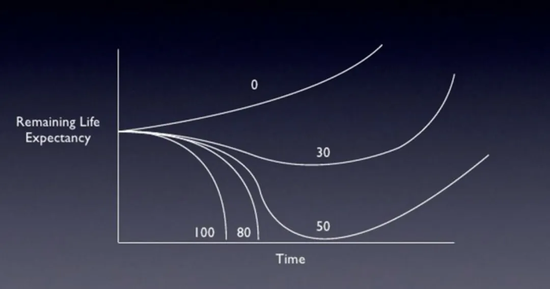
10.最后的竞争格局
在马斯克眼中,未来的AGI玩家只有三个:xAI、谷歌,以及“China Inc.(中国国家队)”。因为这将是体系与体系的竞争。
中国家长为了教育可以付出一切,但马斯克在访谈中说:“现在的学校,除了社交,毫无用处。”
如果2026年AI的智力就超越人类总和,如果3年后机器人就能做最精密的操作,那么我们现在逼孩子死记硬背的那些知识,还有什么价值?
他提到,Grok 4在没有任何视觉辅助的情况下,已经在“人类最后考试”(Humanity‘s Last Exam)中拿到了高分,Grok 5将接近满分。
所以,未来的教育是“人机协作”。
马斯克描绘的未来是:每个孩子都有一个爱因斯坦级别的AI导师(Grok)。
对于中国家庭来说,这可能意味着教育评价体系的彻底崩塌。
你哪怕把题目做得再快,也快不过千分之一秒的GPU。未来的高薪,属于那些能指挥AI、拥有好奇心的人。
- 01/10/2026 – (2) Johnathan Bi on X: “Nothing has made me more optimistic about our AI future than visiting Alpha School. The dominant doomer narrative is that, even if we solve alignment, AI will automate so much that humans will be left with nothing but meaningless hedonism. As AI does more and more humans are https://t.co/dump1Rydoe” / X
- 01/02/2026 – (2) Leonie on X: “ready? https://t.co/2mpIZceSWz” / X

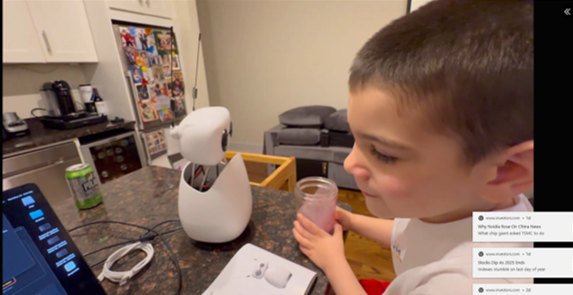
Hundreds of questions were asked by my 4-year-old son as we assembled the Reachy Mini robot (2 hours), connected it with Claude Code (5 minutes), integrated real-time VLMs/web search APIs (10 minutes) and brought embodied Al to life at our kitchen table. May the curiosity and creativity of this Generation Alpha, the first Al-native generation, be a wellspring of daily inspiration to us all. Epic foundational work by @huggingface @pollenrobotics @claudeai

The lecture by PayPal co-founder “Peter Thiel” on “monopoly” is shockingly subversive, overturning the fundamentals of business common sense. As he says, “Competition is for losers”—in fiercely competitive markets, profits evaporate, putting the very survival of companies at risk. Why has Google raked in enormous profits, while airlines have barely eked out any over the past century? Here are 11 lessons that unravel this mystery.
1. The divergence between creating and capturing value Creating value and capturing it as your company’s profit are entirely different things. Airlines provide massive value to society, but fierce competition keeps their profit margins razor-thin. Google, on the other hand, creates value and secures much of it as profit through monopoly power.
2. Profit margins are what matter A company’s worth isn’t determined by revenue scale, but by profits and sustainability. No matter how big it gets, a business model that leaves no profits has no future.
3. Perfect competition destroys value Economics textbooks tout perfect competition as ideal, but in the real world of business, it’s a nightmare. Differentiation vanishes, pricing power is lost, and a brutal war of attrition drags on until profits hit zero.
4. The dichotomy of business There are only two kinds of companies in the world: “monopolies” or “perfect competitors.” Any stable middle ground is just an illusion.
5. Lies about market size Monopolists lie to evade regulation by claiming, “We’re just a small player in a cutthroat massive market.” Competitors, to lure investors, lie by saying, “We’re the leader in a niche market.” You need to see through these narratives.
6. Dominate a small market It’s a mistake to target a huge market from the start. Amazon began with books, Facebook with Harvard students, PayPal with eBay’s power sellers. The iron rule is to monopolize a small, conquerable market and expand outward in concentric circles.
7. Ten times better Being just a little better than existing alternatives isn’t enough. PayPal was ten times faster than checks; Amazon had ten times the inventory of bookstores. Only an overwhelming edge enables monopoly.
8. The four elements of monopoly Powerful monopolies combine four elements: proprietary technology, network effects, economies of scale, and brand. When these align, competition becomes irrelevant.
9. Last-mover advantage “First-mover advantage” is overhyped. What matters isn’t being first, but becoming the “last one standing” in that market. Google wasn’t the first search engine; Facebook wasn’t the first social network.
10. The value of the future (DCF) In PayPal’s early valuation, about 75% of the company’s worth came from cash flows more than a decade out. It’s not short-term growth rates that count, but durability—the ability to endure and persist over the long haul—that’s the true source of value.
11. Competition crowds out meaningful work Competition breeds imitation. The more you fixate on rivals, the more alike your products become. In biology as in business, competition diverts resources to the act of competing itself, distracting from true value creation.
PayPal founder Peter Thiel’s lecture on “monopoly” completely upends conventional business wisdom and is utterly shocking. As he puts it: “Competition is for losers.” In fiercely competitive markets, profits vanish, and corporate survival itself becomes an issue. Why can Google earn massive profits, while airlines have barely made any profit for a century?
The 11 lessons summarized are as follows: 1. The disconnect between value creation and capture 2. Profit margins are the key 3. Perfect competition destroys value 4. The dualism of business 5. The lie of market size 6. Dominate a niche market first 7. Ten times improvement 8. The four elements of monopoly 9. The advantage of the last mover 10. Future value (DCF) 11. Competition consumes true creativity


Learning becomes fun. Learning becomes sustainable.
Forget “learn first, do later.”
Do first, learn later.
You don’t get good and then produce output. You produce output and then get good.
- 12/27/2025 – interview on Fei-fei Li
Today’s latest released 1-hour long conversation with Fei-Fei Li is very much worth listening to. Especially regarding the issue of how to educate children in the AI era, it’s very useful as a parent. Original video link: tmtpost.com/video/7822888. Original text link: tmtpost.com/7816115.html
Everyone is crowding into the Agent track, but I think AI hardware is more appealing. However, the current AI hardware is still a bit lacking—not because it needs to be cheaper, but because it needs to feel better to use. Cost reduction is a mid-to-late stage thing; in the early stages, if you can’t create a revolutionary experience change, no matter how cheap it is, it’s still electronic garbage.
- 12/23/2025 – (3) Ganesh Kumar on X: “The Mathematics Book That Sparked Ramanujan’s Genius https://t.co/c9JEOGC6o4” / X

- 12/21/2025 – 奥尔特曼最新预测!未来告别屏幕和键盘,OpenAI上市会很晚|AI|硬件_新浪新闻. 他举例表示,“现在你有一台计算机,它有一系列设计的选择,你可以关闭或者开启,但它还不能做到提醒我说‘请注意这次采访’,同时在我耳边悄悄说‘你忘记提问了什么问题’。”这是奥尔特曼想象的设备响应方式,他认为这或许很有帮助。
OpenAI的AI硬件计划备受关注,就在近日的一场播客中,被问及在筹备的AI硬件时,OpenAI CEO奥尔特曼(Sam Altman)透露,未来不会推出单一的一个设备,而是“一系列的小设备”
目前OpenAI并未公布硬件的具体形态,但根据供应链的爆料信息来看,其AI硬件没有屏幕、且体积为口袋大小,设备外形类似苹果早期的iPod Shuffle,采用可夹式设计,可挂于颈部,外观和手机、智能眼镜都有很大的不同。
当被问及为何没有屏幕时,奥尔特曼表示,“有一个屏幕的图形界面模式我们用了几十年了,而且它有一个键盘,会减缓输入信息的速度。”虽然在很长一段时间内这种模式确实奏效了,但新事物打开了新的可能性空间,他认为现在的设备形态不适合去实现AI的能力。
随着时间推移,奥尔特曼预测,人们使用计算系统的方式会发生转变,它会从一种略显笨拙的被动响应式状态,转变为极具智能的主动预判式,它能理解你生活的方方面面、所处情境、身边发生的一切,且非常清楚你身边的人,无论是物理意义上的还是通过计算机正在联系的人。而“当前的设备并不适合那样的世界”。
他举例表示,“现在你有一台计算机,它有一系列设计的选择,你可以关闭或者开启,但它还不能做到提醒我说‘请注意这次采访’,同时在我耳边悄悄说‘你忘记提问了什么问题’。”这是奥尔特曼想象的设备响应方式,他认为这或许很有帮助。
- 12/19/2025 – headset for AI tutor
从宿舍修耳机到年销近5亿:90后中登老板,如何在耳机红海杀出一条路? – 我爱音频网
Machine learning is like cooking. Everyone can access the materials to make onion soups, but some recipes bring out more depth than others.
- 12/14/2025 – (6) Eric Wang on X: “This guy literally built the fastest web scraper you’ll ever see https://t.co/IgYbvkGsdc” / X
This guy literally built the fastest web scraper you’ll ever see
- 12/12/2025 – xAI to develop personalized Grok tutoring for El Salvador – over 1 million children – for the next two years, amazing approach
xAI and El Salvador Pioneer the World’s First Nationwide AI Education Program | xAI
Today, xAI is thrilled to announce a groundbreaking partnership with the Government of El Salvador to launch the world’s first nationwide AI-powered education program. Over the next two years, we’ll deploy Grok across more than 5,000 public schools, delivering personalized learning to over one million students and empowering thousands of teachers as collaborative partners in education.
This initiative will create adaptive, curriculum-aligned tutoring that adjusts to each student’s pace, preferences, and mastery level—ensuring every child, from urban centers to rural communities, receives world-class education tailored to their needs. By co-developing this system with El Salvador, we’ll generate new methodologies, datasets, and frameworks to guide responsible AI use in classrooms globally, with a focus on local contexts, safety, and human-centered impact.
At xAI, our mission is to advance scientific discovery and deepen our collective understanding of the universe. This partnership embodies that purpose by harnessing Grok’s frontier capabilities to accelerate learning at scale, bridging educational gaps, and fostering innovation that benefits humanity. It’s a step toward making advanced AI accessible to all, reimagining how nations build knowledge for generations to come.
- 12/09/2025 – the fastest way to do multiplication
The Fastest Way to Learn Multiplication Facts
custom mcp servers are now available with replit agent bring your favorite server & connect it in minutes
6 months ago: Zero production code shipped. Last month with
Agent 3 + Claude Opus 4.5: → Twitter bot that turns replies into whiteboard video lectures
→ Daily weather + architecture photo website → AI-generated Taboo cards for game night → “Hear Say” – guess the movie from just the trailer audio
this combo is genuinely unreal. The barrier between idea and shipped product is gone.
- 12/04/2025 – very interesting approach (3) 傅盛 on X: “这个大胡子用AI在海外卖袜子,30天狂赚270万美金,货还是从1688进的。这种AI+中国制造的打法非常适合咱们中国的创业者借鉴。这个视频真心建议大家好好看看。 https://t.co/aLyNtCWFg2” / X
- 12/03/2025 – from SamThat’s a great idea! There are lots of 3d printing tools. You might even be able to do a rough small prototype with https://meshy.ai. It can take a picture and turn it 3d. Can also do test prints with https://shapeways.com. Or find someone on Fiverr.com to 3d model.
Sent from my iPhone
- 11/24/2025 – great resource on lesson planning
The Truth About Lesson Planning – Education Rickshaw
- 11/24/2025 – combine software and hardware creates competitive edge
(1) phil beisel on X: “Co-design is an efficiency multiplier.” / X
- 11/24/2025 – keep watching this video to regain strength on my journey in entrepreneurship
- 11/23/2025 – lesson plan
The Truth About Lesson Planning – Education Rickshaw
- 11/23/2025 – to build a smart pencile like this?
- 11/23/2025 – “Contrary to popular belief, handwriting is not merely a motor skill; it is also a written language skill.…handwriting leads to better perception of letters in reading than does keyboarding. Forming letters by hand might help create the letter form in the mind’s eye better than does selecting them by key press.” One of my favourite articles in support of explicit handwriting instruction that includes teaching letter formation, directionality, and correct pencil grip to support both decoding and spelling skill development.
- 11/23/2025 – (2) liemandt on X: “Alpha Timeback tutor getting smarter and cheaper (upgraded to Gemini 3.0 Pro). https://t.co/gTMGf8vqvd” / X
- 11/11/2025 – Elon musk reposted this on AI app startup – The best odds are finding an application niche in a highly specialized field with extremely unique and specific data barriers, ideally ones relating to real atoms (hardware or world-related) data and not software/finance. the “physical moat” applications are probably the best bet. From a practical investment lens, the way to apply this thesis to an AI application startup is to ask: are the fundamental assumptions underpinning this startup’s existence going to be the same in five years? Or will they be unpredictably different? The key here is predictability – if the future will be radically different but you can predict it with confidence, you can pre-position your business. But that’s not the case right now in AI. You can’t skate to where the puck is going if all you know for sure is that 20 people are going to slap the puck in some crazy direction at extremely high velocity. Sea changes are now happening on a 9-12 month cycle.
(1) Elon Musk on X: “Seems to be accurate” / X
My AI investment thesis is that every AI application startup is likely to be crushed by rapid expansion of the foundational model providers. App functionality will be added to the foundational models’ offerings, because the big players aren’t slow incumbents (it is wrong to apply the analogy of “fast startup, slow incumbent” here), they are just big. Far more so than with any other prior new technology, there is a massive and fast-moving wave that obsoletes every new app almost as fast as it can be invented. There is almost no time to build a company and scale it. There are two ways AI application startup founders can make money: – Make a flash-in-the-pan app that generates a ton of cash and bank the cash (my estimate is that you have about 12-18 months cashflow generation) – Make a good enough app that you get acquired by one of the big players for sufficient equity The situation is highly unstable – we don’t know if it’s going to crash or go to the moon but both scenarios make it very unlikely that any AI application startup will independently become a generational supercompany (baseline odds are low to begin with). The best odds are finding an application niche in a highly specialized field with extremely unique and specific data barriers, ideally ones relating to real atoms (hardware or world-related) data and not software/finance.
Great, this is blowing up so I will offer some additional follow-up: This is NOT your typical prediction of “the incumbents are agile” or the old “what if Google clones your startup” midwit investor question. The entire novelty of this thesis is that unlike in the past, specific elements of the AI industry are likely to make it so that application companies cannot outrun the wave of obsolescence, which will rush along far, far more quickly than prior technology waves. The foundational technology has not stabilized in any way whatsoever, and applications require a sufficiently stable foundation for some extended period of time in order to create value and then a system for monetizing that value (i.e. “a business”). The wholesale rate of change in the nature of the foundation is the reason why I think almost all application startups will not survive to achieve any significant scale, not because the current large players are special. Most companies don’t survive sea changes in the business-technological environment. But these sea changes happen slowly enough that one can build businesses in between. PC, desktop internet, mobile internet, etc, all took many years to play out, and were spaced out enough for application companies to grow, mature, and become incumbents themselves. As a baseline, most startups don’t survive during a rapid period of change either. The small minority of incumbents who survive need extreme agility and enough of a stable footing in the last epoch (i.e. a revenue base that doesn’t dissolve too quickly) to fund their evolution. Moreover, it’s usually new startups that drive the disruption that challenges incumbents. This is not the case with AI. In this case, the largest players are the ones continually causing the sea change. The environment is so continuously roiled that there is no stable foundation for application startups to become established before the next wave overtakes them. I’m not talking about incumbents outcompeting them, I’m talking about the landscape changing to make them obsolete. From a practical investment lens, the way to apply this thesis to an AI application startup is to ask: are the fundamental assumptions underpinning this startup’s existence going to be the same in five years? Or will they be unpredictably different? The key here is predictability – if the future will be radically different but you can predict it with confidence, you can pre-position your business. But that’s not the case right now in AI. You can’t skate to where the puck is going if all you know for sure is that 20 people are going to slap the puck in some crazy direction at extremely high velocity. Sea changes are now happening on a 9-12 month cycle. Very few startups can turn into a mature business in that timeframe – and by mature, I mean having all the boring stuff like sales relationships and brand recognition. Yes, your engineers can make the change, but human hiring cycles and team solidification and market relations are incompressible (e.g. if you hire 100 people in a month, your organization will implode). Thus, application companies never quite make it to a full business threshold before the sea change happens out from under them. When I say the incumbents will take the application space, I mean that they’re the only ones who can provide enough internal stability and resources to survive the sea changes they themselves will be driving, NOT that they’re going to provide a superior product. They’re just the ones who won’t starve.
花了1周读完Isaacson写的《爱因斯坦传》 爱因斯坦是人类想象力的创造力的顶峰, 其成长过程与常人相当不同: 他讨厌机械式教学,珍视个性、独立思考、想象力和视觉化学习, 得到了适当的引路人指导得以开阔眼界, 自己又勇于探索,取得了空前(绝后)的巨大成就; 然而,他的两次婚姻和精神疾病儿子又让他心力憔悴。 小结和实践建议 1. 守护好奇心 当4岁的爱因斯坦卧病在床时,父亲送他一个罗盘, 磁针的神秘指向让他整日痴迷把玩 实践建议:在家中设置“好奇角落”,定期放置科学玩具(如棱镜、化石标本),允许孩子自由拆解旧电器,建立“为什么”专属记录本 2. 想象力的沉浸式训练 16岁时他幻想追逐光束的场景,在脑海中构建思想实验 实践建议:每周安排“思想实验时间”,引导孩子想象“如果光速变慢会怎样”; 用科幻绘本替代部分童话,鼓励为故事设计科学设定 3. 自由探索的时空保障 他在瑞士阿劳中学时,寄宿家庭允许他每天在阁楼独自思考三小时 实践建议:每周留出半天“自主探索时间”, 不安排才艺班;创建项目式学习档案, 支持孩子用三个月深度研究一个自选课题 4. 引路人的关键介入 医科学生塔爾穆德每周给他带科普读物,大开眼界; 同学格罗斯曼主动分享课堂笔记 实践建议:组建“少年科学俱乐部”,邀请工程师邻居指导;善用线上资源,推荐MIT开放式课程作为课外延伸 5. 转化缺憾为优势 父亲的生意失败让他学会独立; 与权威的冲突强化了他的批判思维 他一生反抗权威,直至自己成为新的权威
这是我长期订阅的几个频道,每个都让我受益匪浅: 1. Andrej Karpathy 前OpenAI联合创始人,前Tesla AI负责人,现在创办AI教育公司Eureka Labs。他的”Neural Networks: Zero to Hero”系列被认为是学习深度学习最好的资源——从零开始,手把手教你构建神经网络。技术含量最高的一个频道。 2. Starter Story Pat Walls采访真实创业者,分享他们从0到1的故事——包括真实收入数据。看腻了”融资多少亿”的新闻?这里都是普通人每月赚几千到几万刀的真实案例。特别适合想做副业的人。 3. Peter Yang Roblox产品负责人,之前在Reddit、Meta工作。他的newsletter”Creator Economy”有14万订阅者,专注产品管理和创作者经济。如果你想了解大厂产品经理怎么思考,看他。 4. AI Advantage 最实用的AI工具教程频道。不讲理论,直接教你怎么用ChatGPT、Midjourney解决实际问题。每个视频都很短,信息密度高。 5. Greg Isenberg Late Checkout创始人,专注社区驱动的互联网业务。他的”faceless YouTube”和”从Reddit找创业idea”系列特别棒。如果你想知道2025年什么生意能做,看他的频道。 6. Tina Huang 前Meta数据科学家,现在全职做创作者。她的核心理念是”minimize effort, maximize outcome”,跟我做bootstrapped产品的思路不谋而合。语速很快,但讲得清楚。特别是SQL系列和AI工具教程,非常实用。 7. Huberman Lab 斯坦福神经科学家Andrew Huberman的播客,全球排名第一的健康播客。用科学的方式讲睡眠、学习、压力管理、表现优化。每期都很长(2-3小时),但信息量巨大。 8. Dan Koe 一人公司(one-person business)领域的标杆。他每天写作2小时,年收入超过250万美元,利润率98%。如果你想知道如何把自己变成一门生意,看他。
We’ve developed a method to achieve highly natural digital human Talk, without the need for pre-recording, fully generated via Prompts, no longer limited to 5-8 seconds in duration, allowing for unlimited extension while maintaining very stable and near-realistic performance expression effects! If you’re interested, I’ll release a tutorial next time.
- 11/09/2025 – 从智能到理解:AI如何真正“懂”教育|AI|教育_新浪科技_新浪网 – 星火教育大模型以讯飞自研的星火X1推理模型为底座,并以二十余年沉淀的高质量教育数据为训练基础,涵盖5万多所学校教师备课、百亿级真实课堂互动、板书演算、学生答题、作业批改、学情分析等多维场景,让AI在真实教学语境中形成理解力。
过去两年,大模型的浪潮几乎以指数速度奔涌:参数翻倍、模型升级、能力扩展。看似一日千里,实则依然在“预测下一个词”的逻辑内循环。对答如流的AI越来越“像人”,却并未更“懂人”。其感受世界的途径仍是学习来自互联网的语料池,理解世界的方式依旧是统计层面的模式压缩。
而教育场域的独特性在于始终围绕“人”展开。教育的复杂性,在于它不是确定性的逻辑系统,而是充满变量的人文场域。课堂氛围、师生交流,都是动态的认知交互,而非可预测的算法轨迹。所以,AI在教育领域的落地,并不只是算法迁移这么简单。
正因如此,AI的发展陷入算力竞速、参数内卷的回旋时,教育领域的命题反而愈发清晰:真正能改变课堂的,不是更强的模型,而是更懂教育的AI。
星火教育大模型以讯飞自研的星火X1推理模型为底座,并以二十余年沉淀的高质量教育数据为训练基础,涵盖5万多所学校教师备课、百亿级真实课堂互动、板书演算、学生答题、作业批改、学情分析等多维场景,让AI在真实教学语境中形成理解力。
可以说,星火教育大模型是亿万师生共创的智慧结晶,是在真实课堂中成长起来的“AI伙伴”。它能判断教师提问的教学意图,能识别学生错误的思维链条,也能在生成反馈时考虑学生的认知阶段与情绪状态。
更关键的是,讯飞以二十余年的教育场景实践,沉淀出独有的教育数据底座与知识图谱,让教育反哺AI成为可能。“懂教育的AI”不是在实验室里“想象教育”,而是在真实课堂中与1.3亿师生一起“上学成长”。它真实地参与到理解-反馈-生长的教育教学闭环中,与师生共生共进,于规模化实践中形成“以教育逻辑校准技术逻辑”的正向循环。
“懂教育的AI”,不是简单的技术堆叠,而是兼具教育理解力、教学赋能度、安全可控性与生态共建力的综合体。
AI能否真正“懂教育”,决定了数字化转型能走多深、走多远。
- 11/09/2025 – 前xAI研究员筹集10亿美元打造情感型AI 初创估值或达50亿美元_新浪财经_新浪网
前 xAI 研究员、斯坦福博士生 Eric Zelikman 正在为其新创立的人工智能公司 Humans& 融资,目标规模约10亿美元,市场对公司估值的定价区间为40–50亿美元,交易条款仍在洽谈中。Zelikman 年仅27岁,曾于2024年加入马斯克旗下 xAI 参与 Grok 聊天机器人与推理系统开发,并因“Quiet-STaR”研究受到学界关注,该方法让大模型在回答前生成内部推理,从而提升复杂问题处理能力。
Humans& 的核心方向是研发具备“情感理解”“长期记忆”和“对回答后果敏感”的模型,不再把每次对话当成孤立事件。Zelikman 表示,现有模型并不关心对话对象,也未理解长期影响,因此更难成为真正的协同伙伴。公司已吸引来自 Google、Meta、Anthropic、OpenAI、DeepMind 等机构的科研人才,联合创始人包括曾打造谷歌(279.7, -5.64, -1.98%)广告体系的资深工程师、斯坦福教授等,团队背景令资本市场高度关注。
Humans& 聚焦“人与AI协作”,强调理解不同人的目标、价值与偏好,以协助解决集体决策等复杂人类问题,而非替代劳动力。其融资受到2025年AI投资热潮推动,今年第一季度全球AI相关融资达731亿美元,占全球创投近六成,多家顶尖研究者创办的初创公司都已获得数十亿美元支持。不过机构也开始担忧早期估值偏热,认为“AI标签”正在推高溢价。
- 11/09/2025 – 探访2025乌镇峰会:AI眼镜成为“私人导游”,数字技术让古籍“活”起来|AI_新浪财经_新浪网
- 11/08/2025 – Musk reposted Pope Leo XIV’s comments on X
Technological innovation can be a form of participation in the divine act of creation. It carries an ethical and spiritual weight, for every design choice expresses a vision of humanity. The Church therefore calls all builders of #AI to cultivate moral discernment as a fundamental part of their work—to develop systems that reflect justice, solidarity, and a genuine reverence for life.
“To me, the biggest imminent threat is just outsourcing thinking. I think that’s a really dangerous thing to do. A couple years ago, I was like, ‘Hey guys, like I do not think this is a safe thing for kids.’ I do not think when you have a developing brain, probably before 24, 25, you should be using a tool that can write for you. I think that’s an incredibly dangerous thing.”
From there, Grimes told the podcast’s host that part of her worries were based on a study about how AI use affects the brains of adults who rely on it. “Studies have been coming out that it is causing neural, brain atrophy basically.”
While there haven’t been any studies linking the use of AI to brain atrophy, or the loss of brain cells, there has been evidence of possible negative effects. A June 2025 Time article reported on an MIT study on AI use that broke participants up into three groups and had them answer SAT-style questions. That study found that the group that was allowed to regularly use ChatGPT “consistently underperformed at neural, linguistic, and behavioral levels.” Furthermore, the study found that the group’s results got worse as they continued to use ChatGPT and got lazier.
- 11/04/2025 – adaptive learning
Many “adaptive” learning apps aren’t really adaptive at all. They start everyone at the same level and then react to mistakes. That’s reactive, not adaptive. A real adaptive system begins with inference about the learner’s state. Typical pattern I’ve noticed with vocab apps for example: 1. Every learner starts with the same set of words or grade band. 2. The app monitors right/wrong responses. 3. If a student gets several wrong, it repeats those words or drops to easier ones. 3. If they get several right, it unlocks harder lists. This is just reactive difficulty adjustment, a form of after-the-fact remediation: the system waits for error signals before making changes. It infers nothing about what the learner knows beforehand. With the emergence of LLMs, we can do a hell of a lot better than this.
Great questions Bruno. You’re right that teachers do this but for me there is a big distinction: 1. Teachers read the type of error, the hesitation, the student’s facial cues, and their previous pattern of reasoning etc not just the fact they got it wrong. 2. But most vocab apps don’t do that. They only see “wrong = try again,” They log correctness and adjust difficulty post-error (“you missed this, let’s review” etc), which is fine for drill I guess but for vocab and reading comprehension, I don’t think it’s great. For example, vocabulary is not one kind of knowledge; it’s many. Learning “apple” (a concrete fact) is not the same as learning “therefore” (an abstract, logical relationship). This for me is why the reactive/adaptive thing is so crucial. And I’m definitely not claiming LLMs are sorcery! they’re just unbelievable probabilistic pattern recognisers. The thing I think they *might* be able to do is model meaning, not just correctness. So instead of waiting for a wrong answer, an LLM can infer from the type of choice, response time, and linguistic pattern which sub-skill is shaky: morphological, semantic, or contextual. That’s adaptive because it uses the signal before failure to preempt the next best learning moment. I might be way off there but I think that LLMs will be a game changer in terms of this kind of adaptivity mainly because of the predictive processing capabilities. Does that make sense?
- 11/03/2025 – how to use Grok like a pro
Grok isn’t your typical AI – it’s the chaos whisperer. Born from Elon’s xAI lab and plugged straight into the bloodstream of X, Grok’s not just smart – it’s alive in real time. Here’s the professional cheat code: 1. Pay the Gatekeeper. No Premium+, no Grok. Elon’s humor costs $16/month. Once in, the robot icon becomes your digital co-pilot. 2. Prompt Like You Mean It. Vague gets you generic. Be surgical. Instead of “marketing tips,” try “3 X-worthy hooks for fintech startups this week.” The clearer your ask, the sharper the output. 3. Exploit the Live Feed. Grok’s killer feature? It reads the room – literally. “What’s trending in EV tech?” gets you X data before journalists wake up. Perfect for marketers, analysts, or anyone chasing cultural relevance at speed. 4. Switch the Tone. Need wit? Ask for sarcasm. Need polish? Demand “no jokes.” Grok mirrors your mood, not just your words. 5. Treat It Like a Research Partner, Not a Replacement. It’s smart, not omniscient. Cross-check, iterate, evolve. Pro Move: Use Grok to stress-test your own ideas. Pitch it a plan, a headline, or a strategy – then ask it to “tear this apart.” Its sarcasm becomes your QA department. If Grok can’t break it, you’re onto something… Source: Eman Fatima, Info Drift, @xAI, Exaflop Labs
- 11/01/2025 – to learn vibe coding Complete Vibe Coding Tutorial: Build a Full Stack App in 30 Min with AI | Matt Palmer (Replit)
- 11/01/2025 – Elon Musk: In 5-6 years, the phone becomes an AI edge node — basically a screen and audio, “no apps, no operating systems”, a cloud AI talks to your on-device AI, generating real-time video, you’ll get everything through AI that anticipates what you want Joe Rogan Experience #2404 – Elon Musk – YouTube
Musk’s clip from a recent Joe Rogan podcast outlines a future where smartphones evolve into AI edge nodes—essentially screens for real-time, predictive video generation via cloud-device AI sync, ditching apps and OS entirely within 5-6 years. Posted by AI enthusiast @slow_developer, the video amassed over 2,000 likes and 280,000 views in under a day, but replies overwhelmingly express doubt, often citing Musk’s history of optimistic timelines like unfulfilled self-driving promises.
The vision echoes advancing edge computing research, such as Qualcomm’s AI chips enabling on-device inference to cut latency, yet peer-reviewed studies in IEEE Transactions warn that real-time personalized video at scale faces bandwidth and privacy hurdles.
What Are AI Edge Nodes?AI edge nodes refer to devices or computing resources located at the “edge” of a network—close to where data is generated or used— that incorporate artificial intelligence (AI) capabilities for processing and decision-making. Instead of sending all data to a distant cloud server for analysis, these nodes handle AI tasks locally or in a hybrid manner with the cloud, enabling faster response times, reduced latency, improved privacy, and lower bandwidth usage. This is part of a broader concept called edge AI or edge computing with AI integration.Key characteristics include:
Real-time processing: They analyze data on-device, such as in IoT sensors, autonomous vehicles, or smart cameras, without constant cloud dependency.
Hardware examples: Devices like smartphones, wearables, drones, or industrial sensors equipped with AI chips (e.g., from NVIDIA or Qualcomm) that run machine learning models.
Benefits: Enhanced efficiency for applications like predictive maintenance in factories, real-time video analytics in security systems, or personalized recommendations in consumer gadgets. Challenges include limited on-device power and the need for optimized AI models. cisco.com
In a recent discussion on the Joe Rogan podcast (aired around October 31, 2025), Elon Musk described a futuristic vision of “AI edge nodes” specifically in the context of mobile devices. He predicted that in 5-6 years, phones would evolve into simple “edge nodes” acting as screens and audio interfaces for AI, with cloud-based AI syncing with on-device AI to generate predictive, real-time video content tailored to user needs—essentially anticipating and delivering what you want without traditional interfaces. decrypt.co
Difference Between AI Edge Nodes and SmartphonesWhile modern smartphones can already function as AI edge nodes (e.g., running on-device AI for features like voice assistants, photo editing, or facial recognition), there are key distinctions, especially when considering Musk’s speculative future vision. Here’s a comparison:
|
Aspect
|
AI Edge Nodes (General/Conceptual)
|
Smartphones (Current Typical Devices)
|
|---|---|---|
|
Primary Role
|
Act as decentralized AI processors at the network edge, focusing on local inference and data handling with minimal cloud reliance. |
Multi-purpose communication and computing devices with AI as one of many features, often relying on cloud for heavy tasks.
|
|
Architecture
|
Often stripped-down hardware optimized for AI tasks (e.g., sensors + AI chips); in Musk’s view, future nodes could be basic interfaces (screen/audio) with no OS or apps, relying on AI for all functionality. |
Full-fledged systems with operating systems (e.g., iOS, Android), apps, and hardware like processors, cameras, and batteries; AI is integrated but not the sole driver.
|
|
Data Processing
|
Emphasizes on-device AI for real-time, privacy-focused decisions; hybrid cloud-edge sync for complex tasks. ready.net
|
Mix of on-device and cloud processing; apps handle user interactions, with AI enhancing specific functions (e.g., Siri or Google Assistant).
|
|
User Interaction
|
Potentially predictive and seamless via AI (e.g., Musk’s idea of AI-generated video that “anticipates what you want”). youtube.com
|
App-based and manual; users navigate menus, download apps, and interact via touch/screens.
|
|
Examples/Use Cases
|
Industrial robots, smart city sensors, or future “dumb” devices interfacing with AI clouds. akamai.com
|
iPhone, Samsung Galaxy—versatile for calls, browsing, gaming, with growing edge AI via chips like Apple’s Neural Engine.
|
|
Timeline & Maturity
|
Emerging and conceptual for consumer tech; Musk predicts full evolution in 5-6 years, but skeptics note his history of optimistic timelines (e.g., delayed full self-driving). @techAU
|
Mature and widespread today, already incorporating edge AI elements but not fully transformed.
|
In summary, smartphones are evolving toward becoming more advanced AI edge nodes, but current ones retain traditional structures. Musk’s prediction envisions a radical shift where devices become minimalist AI conduits, potentially disrupting the app ecosystem. instagram.com
This remains speculative, as practical hurdles like bandwidth, privacy, and hardware limits persist.
Broader industry trends support this idea, though with varying timelines. AI’s rapid advancement allows for more efficient, adaptive systems that reduce latency, enhance privacy through on-device processing, and personalize interactions by analyzing user behavior.medium.com +2
For instance, AI can automate routine tasks (like booking rides or editing photos) without dedicated apps, potentially cutting down on storage bloat, update fatigue, and the need to switch between interfaces.dev.to +1
Critics note challenges like bandwidth limits, privacy concerns, and Musk’s history of optimistic deadlines (e.g., delayed full self-driving tech), but emerging hardware like Qualcomm’s AI chips and software like generative models are paving the way. instagram.com
Will Apps Disappear?In Musk’s vision, yes—apps as we know them would vanish, replaced by a unified AI system that delivers content proactively. decrypt.co +1
He envisions no need for individual apps like email or social media platforms; everything routes through AI, which could even render services like X (formerly Twitter) redundant if AI aggregates and anticipates information needs.
Some apps could persist for specialized tasks (e.g., high-security banking), but the trend points toward AI agents outperforming them in versatility and efficiency within 5-10 years. dev.to +1
This could disrupt app stores, shifting revenue from downloads to AI ecosystem subscriptions.What Will Replace Mobile or Computer Apps?AI-driven alternatives would take over, focusing on proactive, context-aware interactions. Here’s a breakdown:
|
Current Apps/OS
|
Potential Replacement
|
Key Advantages
|
|---|---|---|
|
Operating Systems (e.g., iOS, Android)
|
Unified AI inference engines running on edge nodes, with cloud sync for heavy computation. blockchain.news
|
Minimalist hardware reduces complexity; AI handles multitasking and updates automatically.
|
|
Mobile/Computer Apps (e.g., Uber, Instagram, Email)
|
AI agents or assistants that generate dynamic UIs and content on-the-fly, anticipating needs (e.g., “Show me travel options” spawns a customized interface). |
Personalized, cross-platform experiences; no downloads or silos—AI pulls from multiple sources seamlessly. dev.to
|
|
User Interfaces
|
Predictive video/audio streams generated in real-time, like Musk’s “AI video inference” that shows what you “might want” without prompts. |
Reduces cognitive load; adapts to habits for efficiency, though it raises concerns about over-reliance or manipulation.
|
|
Developer Tools
|
AI model interfaces or “behaviors/plugins” where devs build logic for AI to interpret, rather than full apps. medium.com
|
Faster iteration; focuses on intent over code, enabling hyper-personalization. |
Ultimately, replacements like AI agents could make devices feel like extensions of the mind, but success depends on overcoming technical hurdles and user adoption. This remains speculative, with some viewing it as a utopian efficiency boost and others as a dystopian loss of control.
- 10/25/2025 – a good AI learning tool – AI notetaker Turbo AI – give me an idea to let AI tutor not to communicate with other people other than the kid the AI tutor wants to teach
20-year-old dropouts built AI notetaker Turbo AI to 5 million users
recordings in large halls often pick up background noise, so the founders built features that allow students to upload PDFs, lectures, YouTube videos, or readings instead. That’s now a more common use case than live lecture recordings.
“Students will upload a 30-page lecture and spend two hours going through 75 quiz questions in a row. You don’t do that unless it’s really working,” said Dhawan, noting that students love how the product saves time and helps them retain information.
- 10/22/2025 – great interview from Yang Zhenning
杨振宁史上最精彩的演讲,没有之一,全程高能,太吸引人了!顶级物理学家的思维,究竟与普通人有多大差距
- 10/21/2025 – it is a great idea to create an AI clone of ourselves, so does it for kid?
(1) Ray Dalio on X: “My AI Clone and What We Can Expect from AI Clones” / X
- 10/20/2025 – very interesting podcast from Karpathy
Andrej Karpathy — “We’re summoning ghosts, not building animals” on youtube
- 10/20/2025 – Elon Musk’s most inspiring speech that can help me with designing of AI tutor

(1) Brett Winton on X: “@skorusARK Homeschool version https://t.co/ceIy7furZU” / X

xAI API just got a major upgrade It now supports agentic server-side tool calling Manages end-to-end reasoning and tool-execution loop, all on the server side Unlike traditional APIs, you don’t have to orchestrate every tool call yourself for more details official docs below

official doc is here Overview
- 10/17/2025 – (1) Salvazion on X: “@amXFreeze A great step forward to achieve AGI! https://t.co/pehHcCEBVT” / X
10 characters of AGI
- 09/29/2025 – a great idea onxAI API just got a major upgrade It now supports agentic server-side tool calling Manages end-to-end reasoning and tool-execution loop, all on the server side Unlike traditional APIs, you don’t have to orchestrate every tool call yourself for more details official docs below AI robot and AI tutor from an Indian kid
AI won’t replace you, but someone using AI will: 16-year-old innovator Rahul John Aju | Watch
- 09/27/2025 – great movie – I Am Mother is a 2019 science fiction thriller film directed by Grant Sputore, available on Netflix. It stars Clara Rugaard as Daughter, Rose Byrne as the voice of Mother (an android), and Hilary Swank as Woman. The story is set in a post-apocalyptic world and explores themes of artificial intelligence, motherhood, morality, and human survival
I Am Mother – Full Movie – Luke Hawker, Rose Byrne, Maddie Lenton – YouTube
full review and ideas for AI tutor I.am.mother.movie.review
- 09/21/2025 – good prompt engineering (3) Lex Tang on X: “分享一下睡前强迫 AI 通宵干活的 prompt https://t.co/cIEziYGWf8” / X
- 09/17/2025 – inspiring stories
‘I built a top 100 app with zero coding skills’
At 33, Sina Sinry has turned a bold idea into one of the most downloaded apps in the United States, without ever writing a single line of code.
The Turkish-born entrepreneur, raised in Langroud, built Flibbo, an AI-powered creative platform that allows users to design short films and digital content. In just two years, the app has drawn more than 500,000 users worldwide and earned a place among the Top 100 on the U.S.
- 09/12/2025 – I should learn more about this and contact with them for experimental teaching of our kids Google Launches AI Quests to Bring AI Literacy to Classrooms
Stanford Accelerator for Learning
- 08/28/2025 – action item: draft a plan, design an app, come up with a prototype in one week, to complete by EOB Sept 05
- 08/30/2025 – great idea of basketball AI coach (2) Farza 🇵🇰🇺🇸 on X: “used gemini 2.5 pro to build a simple shot counter for myself + give jordan feedback per shot. https://t.co/GaonBFBGMY” / X
Action, I will take try Matthew’s video on Gemini2.5 pro

- 08/29/2025 – great books, websites, blogs, scifi books and movies on future AI tutor
- 08/28/2025 – (1) Reid Hoffman on X: “According to @mackenzieprice, we built an education system to mass-produce compliant workers, and she’s set out to change that. @AlphaSchoolATX is using AI to reimagine how kids learn… and they’re launching 12 new schools this fall. More on my conversation with Mackenzie: https://t.co/nX3gKa9d92” / X
- 08/28/2025 – (1) Millie Marconi on X: “The gap between rich kids with private tutors and everyone else just closed. Google’s new AI gives every student personalized learning, instant help, and visual explanations. Education equality just became possible. 5 game-changing features 👇 https://t.co/M6gLcN0iXD” / X
- 08/28/2025 – Principal of the school promoted by Bill Ackman says teacher pay starts at $100K and kids can earn money to fund projects
- Alpha School offers AI-based learning and has been touted by Bill Ackman.
- The school’s principal, Joe Liemandt, outlined its approach to academics in a recent podcast.
- Teachers’ salaries start at six figures, he said, and students can earn money for their schoolwork to fund “passion projects.”
Alpha School is a network of private institutions that embrace AI-based learning for students in kindergarten through 12th grade. The school uses AI to help students complete their core academic subjects in just two hours per day, freeing up their afternoons for “life skills.” Workshops listed on the school’s site include “AI Teaching Assistant,” “Public Sales Challenge,” and “Spartan Race Finisher.”
Alpha School doesn’t use the word “teachers” at all, referring to classroom leaders instead as “guides.”
“They don’t do academic teaching,” Liemandt said on the podcast. “If you are an adult in our buildings, you do not do academic teaching.” Calling them teachers, he said, would give “the wrong impression.”
According to its website, the school uses AI to provide students with personalized, one-on-one learning. Liemandt said generating personalized lesson plans for kids was the “magical unlock.”
Alpha School currently has 18 locations listed on its website as open or coming, including in Texas, Florida, and California, with a New York City location scheduled to open in the fall. The school was founded in 2014 and is accredited by Cognia. Location-dependent tuition ranges from $40,000 to $75,000.
Liemandt outlined several ways Alpha School keeps its students motivated, including leaning into gamification, with the ability for students to “unlock” afternoon activities and other privileges by completing their two-hour learning sessions.
He said money is another motivator Alpha School uses that can be controversial among parents.
“Your kid can earn money by doing academics, so they can fund their passion projects,” Liemandt said. He added that parents feel more comfortable about money incentives when their kids use it to fund their passions, like flying somewhere to participate in a play or putting it into an investment fund.
great interview w/ MacKenzie Price of Alpha School
This is the definitive conversation on Alpha School with @jliemandt, who is the school’s principal and backer. What if kids could learn in two hours a day, test in the top 1% nationally, spend their afternoons mastering other great skills, AND love school more than vacation? What sounds impossible is already happening at Alpha. If you are a parent like me, it’s impossible not to wonder how to make sure your kids will benefit from this enormous innovation. We explore everything in exhaustive detail—the learning science, the role of software and AI, the central role of motivation, the challenges of scaling to ALL kids, and more. Joe is one of the most successful entrepreneurs in history, who has now decided to devote his next two decades to ushering in a new era of education. I hope this becomes a historically important episode. Timestamps: 0:00 Intro 0:54 What Is Alpha School? 4:02 The 200-Year Education Problem 8:06 Two-Hour Learning 16:41 Academic Results & Efficiency 23:51 AI-Generated Personalized Lessons 35:03 EdTech Fails Without Motivation 41:18 Life Skills & Afternoon Workshops 1:13:35 Gamification 1:29:09 Scaling Challenges 1:46:52 Video Games for Education 1:54:07 Joe’s Background & Trilogy 2:14:22 Lessons from Mentors 2:32:29 The Kindest Thing
- 08/26/2025 – Class Dismissed – Colossus – a very touch journey of life
the pdf of whole article is here Class Dismissed – Colossus
- Bill Ackman is acting as an ambassador for Alpha School, a private school that uses AI to condense core subject lessons into two hours daily.
- Alpha School, which is expanding to New York City, avoids diversity, equity, and inclusion lessons, focusing on life skills.
- Ackman will appear at a panel at his Hamptons home with Alpha School’s co-founder and principal to discuss K-12 education.

